Executive Summary
I keep reading, often with a fair amount of irony attached, that oil analysts were wrong to expect a major price shock from the functional closure of the Strait of Hormuz.
That view looks at the wrong price. Commentators remain fixated on crude oil and especially ICE Brent futures. The crisis has arrived further down the barrel, in petroleum products. That is the part of the oil market that consumers actually pay for.
Even crude was hardly calm. Physical Brent, better known as Dated Brent, peaked at $146 per barrel in April 2026. Dated Brent is the global physical benchmark against which almost every crude barrel outside North America is priced.
Add physical differentials of as much as $12 per barrel for grades such as Johan Sverdrup, a medium-sour substitute for crude trapped in the Middle East, and some Asian buyers may have paid close to $160 before freight. Chinese demand then hit the brakes and took some heat out of the physical market.
But crude is not my topic du jour. This episode is about what I call the Great Value Migration in oil: the movement of scarcity value and margin capture from crude production into refining, particularly middle distillates such as diesel and jet fuel.
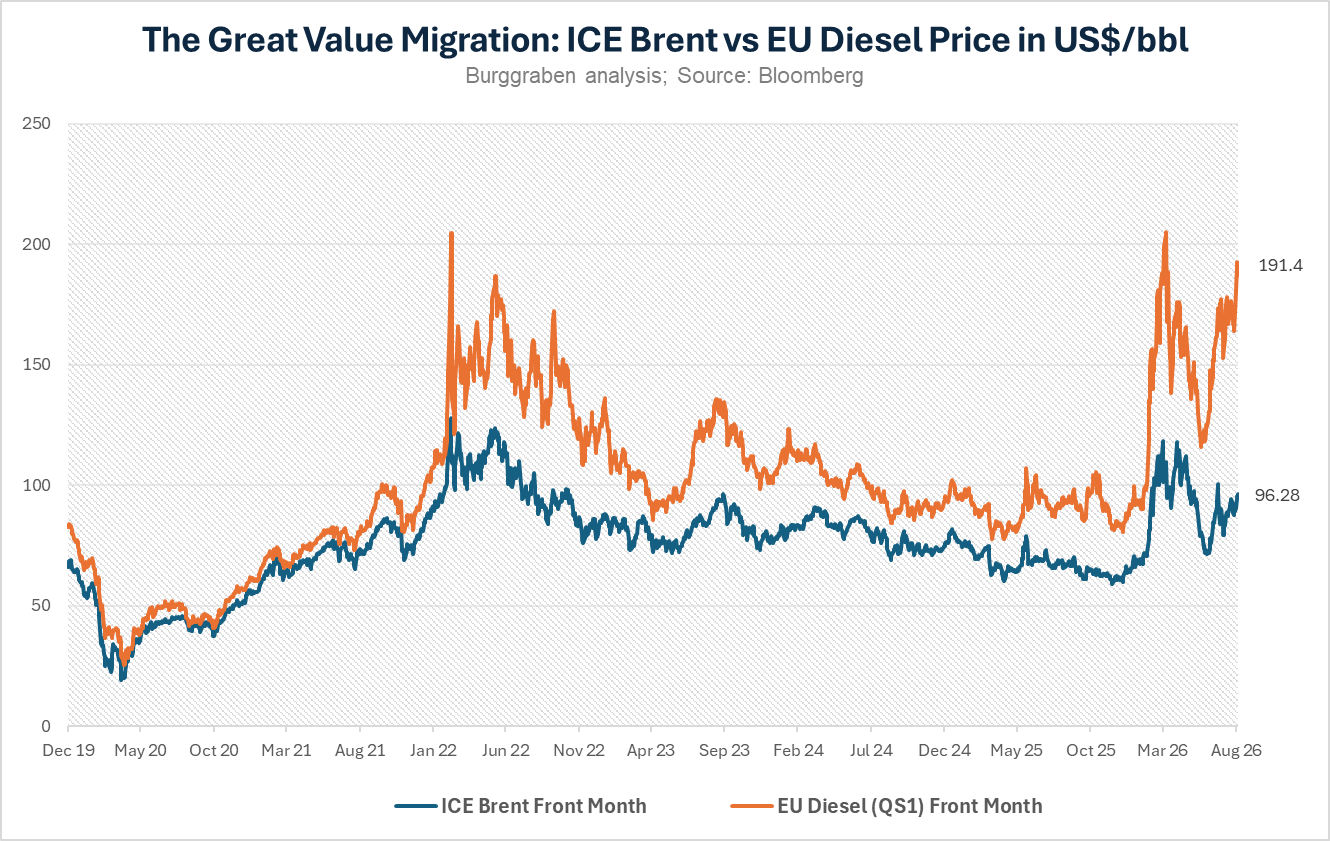
At the time of writing, front-month European diesel trades at $191 per barrel, or $1,424 per metric tonne. Front-month ICE Brent trades at $96. A barrel of diesel in Europe therefore costs almost exactly twice as much as a barrel of Brent crude.
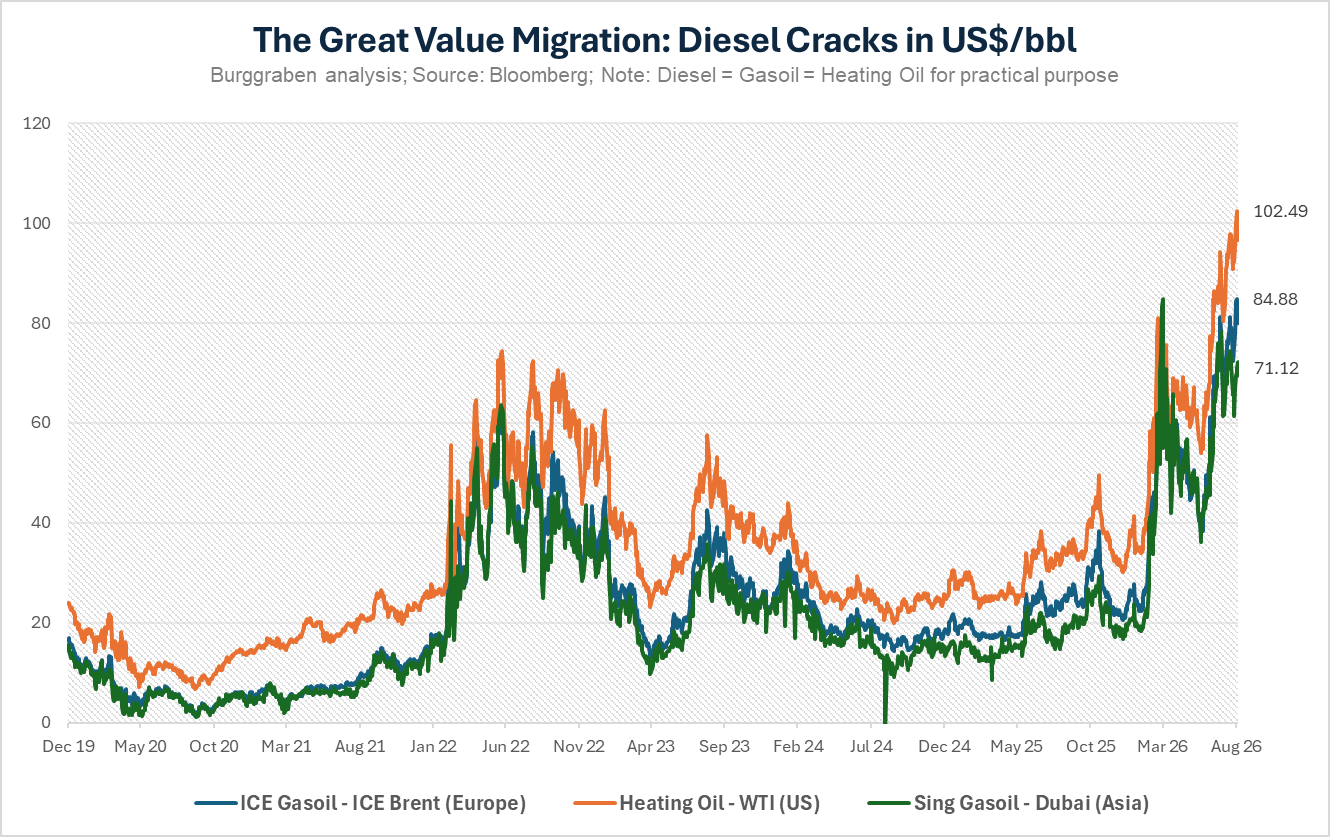
This is not a European phenomenon. Diesel margins, or crack spreads, are exceptionally strong across the major refining centres.
The diesel crack, usually called the gasoil crack outside North America, measures the difference between the value of diesel and the crude oil used to make it. It is the most important refined-product spread in today’s oil market.
Diesel and its close cousins - jet fuel, gasoil and marine fuel - drive more commercial activity than gasoline. Trucking, shipping, aviation, industry, construction, agriculture and heating all depend on middle distillates.
Part of this strength is structural rather than cyclical.
Since 2020, a persistent shortage of middle distillates has kept cracks above their pre-pandemic norms for long stretches. That shortage explains why refining margins have remained high, why refiners keep pushing throughput and why crude prices can sometimes weaken without delivering much relief to consumers.
Today, diesel cracks sit at the top of the Bloomberg history available to us. In the United States, the front-month spread is roughly $102 per barrel. Add that to WTI at $92 and wholesale diesel costs about $194 per barrel, or $4.62 per gallon. Distribution and retail margins then take the pump price towards $5.60. That is close to the highest level American consumers have ever paid.
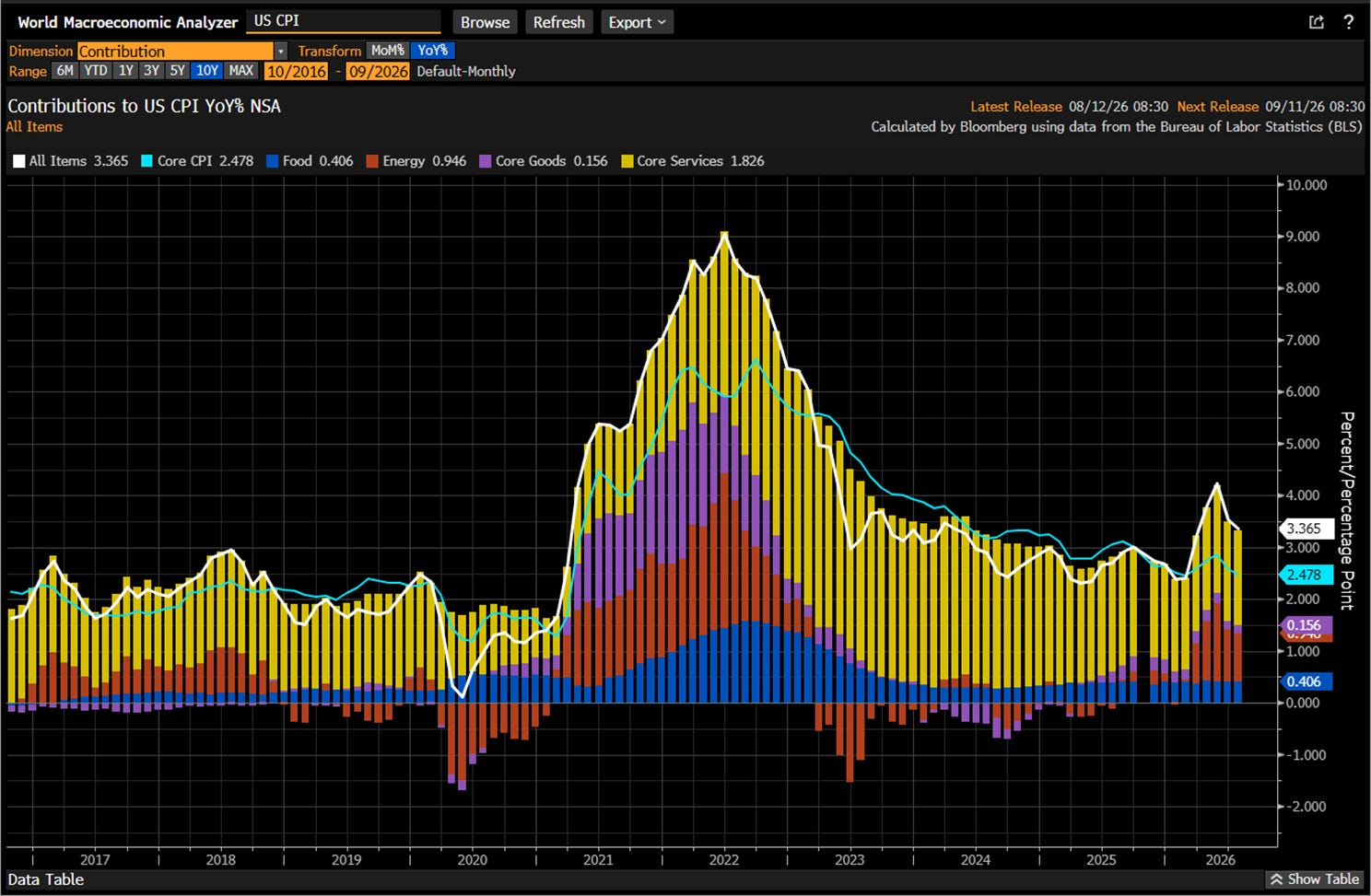
So who says the closure of Hormuz failed to cause an oil-price crisis? It did. The war in Ukraine added another layer by attacking the refining system that once supplied a large share of Europe’s diesel. The consequences will reach inflation, interest rates and eventually equity valuations.
The central point is that crude availability and diesel availability have separated. Russia is exporting more crude, in part because it cannot refine as much of it, while China is importing materially less. The residual flow through Hormuz also appears weighted towards crude, although Kpler’s dark-fleet coverage is too weak to measure that leakage reliably.
Together, these factors keep the crude market relatively behaved. The product market has no such cushion: the Middle East, Russia and China are refining less, import demand has not fallen with their output, and the available replacement crudes yield less diesel. The same buyers are chasing fewer suitable barrels, so the adjustment appears in refining margins rather than in crude alone.
Let me show you how the squeeze works, and why it is unlikely to disappear quickly.