


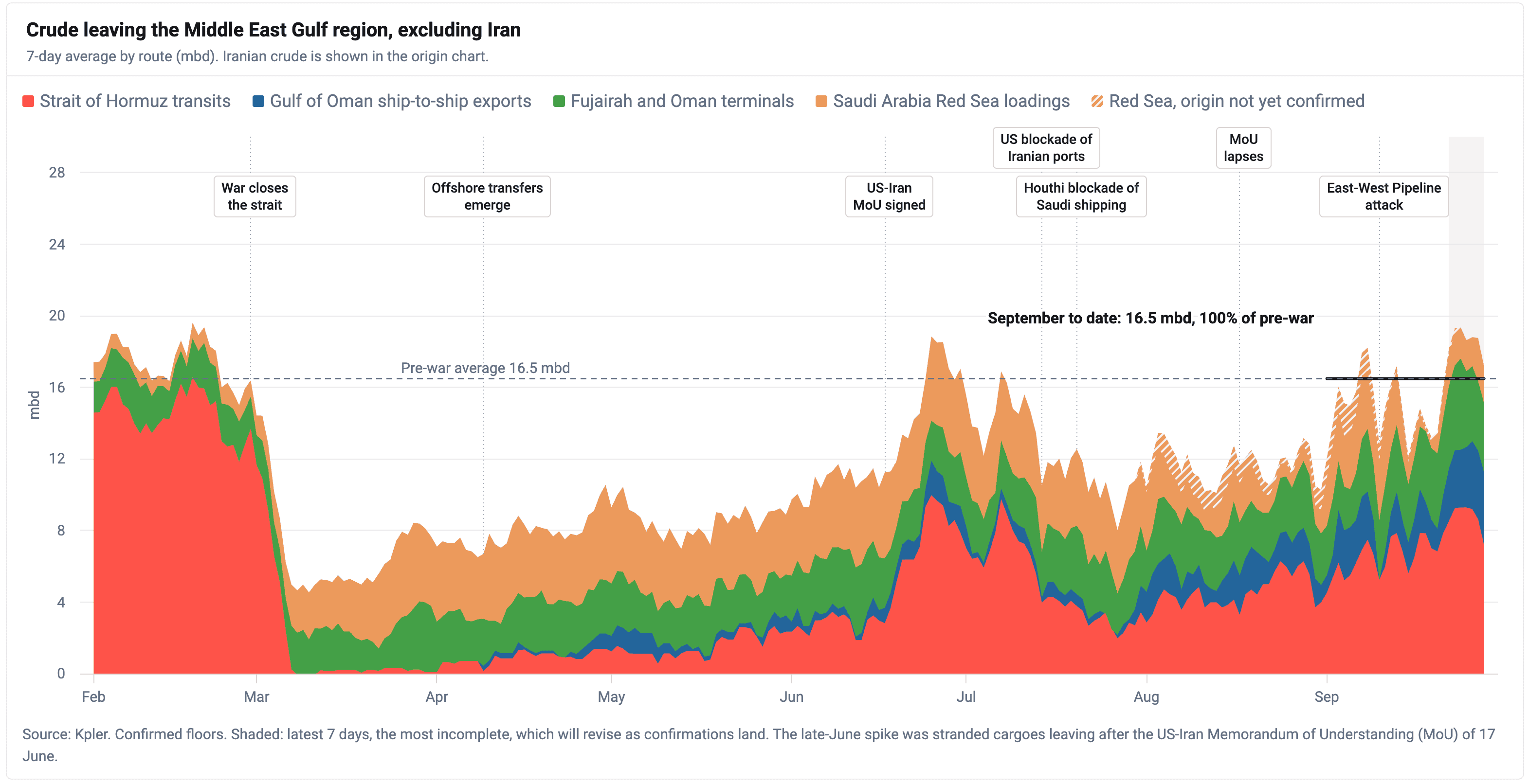
Iran Lost Control of the Strait
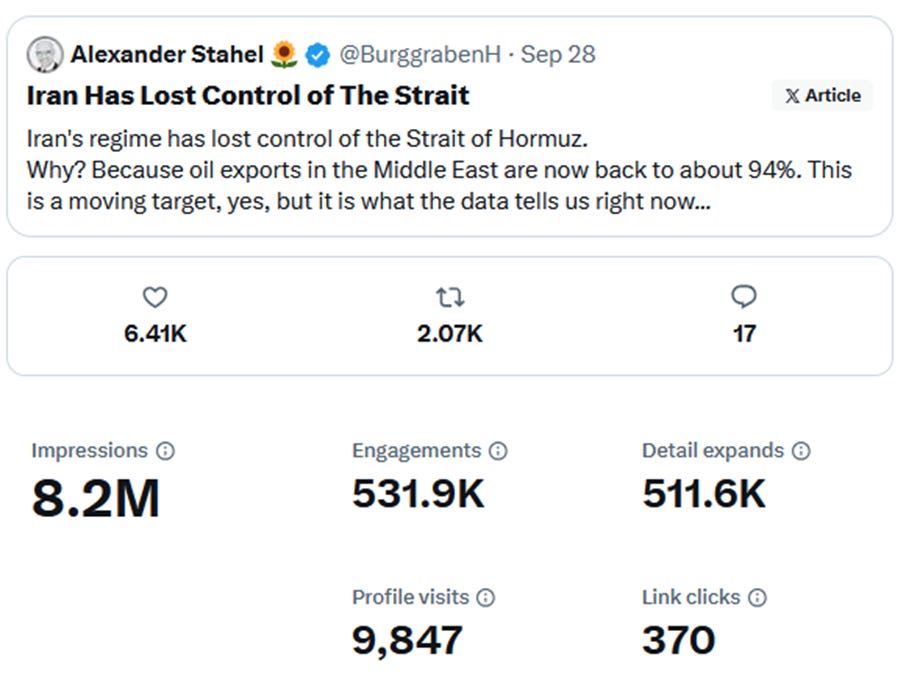
When I set out my view on X last week — that Iran has lost control of the Strait of Hormuz — the post went unexpectedly viral.
I got two kinds of comment, and two only. The first was the positive feedback loop from the Trump camp, including the man himself, who re-posted my tweet on his TruthSocial platform (link). The second was the negative loop. It ran from “prove it” to fake news to straight-out verbal abuse. The usual really.
So let me be clear upfront. I present this barrel count to you with authority, or I would not present it at all.
I have worked for months to understand these flows in the age of dark fleeting — industry lingo for commercial vessels switching off their AIS (Automatic Identification System), the terrestrial system ships use to transmit their identity, position, speed, course and, above all, cargo.
That last field is what lets tanker trackers count commodities, from crude barrels to LNG cargoes and beyond. Switch it off and real-time tracking goes dark until it comes back on. On the Hormuz Shuttle, vessels usually keep AIS running while they load.
Once the vessel approaches the entrance to the Strait, AIS goes off until the cargo reaches relatively safer water off the coast of Oman, where it is usually transferred to a client vessel at sea (STS) some two to three days after it went dark. The dark period runs longer if the transfer happens further out.
Obviously that is far from ideal for real-time barrel counting in a rather sentimental industry where everything gets priced at the margin. But frankly, for long-term investors looking to express themselves in mispriced equity and debt, either long or short, it is not the end of the world. It simply means the final export volume becomes clear a week or two later than it used to.
My point is that we will know the final answer inevitably. The question is how fast, and with what lag. There is no doubt about the process once the number becomes final, be it one week later or three.
Today I give you two counts built on two very different approaches. You will struggle to find either elsewhere. As importantly, we run all sorts of cross-checks to make sense of the data, from tracking the buyers to assessing the overall logistics math. That too I will show you, and again, I doubt you will find it easily elsewhere.